
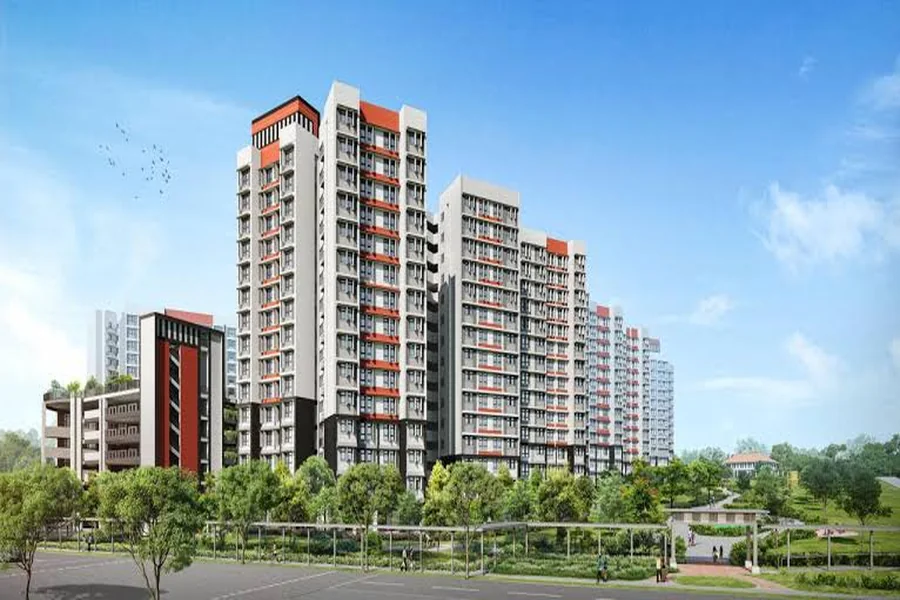
A land price headline can shape perceptions long before a condominium opens for sale. At $980 per square foot per plot ratio, the initial impression may be one of attractive entry economics. Yet the $1,263 figure introduces a more searching question: what does the land actually cost when assessed against the residential component? For buyers considering Chencharu Central Residences, understanding that distinction is more useful than treating either number as a shortcut to future launch pricing.
The new condominium at Chencharu Close, by Evia Real Estate, Gamuda Land and Ho Lee Group, deserves to be assessed through that more discerning lens. The issue is not simply whether $980 looks inexpensive or $1,263 looks demanding. It is whether the two figures measure the same thing, what assumptions sit behind the adjustment, and how much either number can genuinely tell a purchaser.
Why $980 psf ppr Is Only the Starting Point
The abbreviation “psf ppr” refers to dollars per square foot per plot ratio. In land tender reporting, it generally expresses the land consideration against the development floor area used for that calculation. It is a land acquisition metric, not the price a homebuyer pays for an apartment. That distinction matters because a compact headline can make a development’s cost structure appear simpler than it is.
A quoted rate is useful for comparing sites only when the underlying calculations are reasonably comparable. The relevant floor area, permitted uses and development obligations all influence how a land bid should be interpreted. Where a site involves different uses or particular delivery requirements, a single blended figure may not fully describe the economics attributable to its homes. The headline remains informative, but it is not the entire investment narrative.
Reading the $1,263 Figure at Chencharu Central Residences
The $1,263 figure is approximately 29% above $980. That is a meaningful difference in analytical terms, but it does not, by itself, establish that buyers will pay a corresponding premium. Nor should it be presented as an announced selling price. Its relevance lies in the proposed shift from a broad land rate to a more specific view of the residential land burden.
Crucially, the precise reconciliation requires the calculation behind it. An adjusted residential rate may depend on which floor areas are included, how land consideration is apportioned between uses, and whether particular obligations are accounted for separately. Without that supporting breakdown, $1,263 is best treated as an analytical benchmark rather than an independently established project cost. Calling it the “reality” should invite closer examination, not replace one unqualified headline with another.
The Denominator Can Change the Entire Reading
The mathematics is straightforward even when development accounting is not. Divide the same cost by a smaller relevant floor area, and the resulting rate rises. Alternatively, allocate costs differently across components, and the amount attributed to the residential portion changes. This is why two figures associated with one development can tell different stories without necessarily being contradictory.
For a prospective purchaser, the important question is therefore not merely, “Which number is correct?” It is, “Correct for which purpose?” A blended land acquisition rate can describe the tender outcome, while an adjusted figure can help examine residential feasibility. Both can be useful if their bases are transparent. Neither should be compared casually with another project’s land rate unless the same methodology has been applied.
Neither Land Rate Is a Launch Price Formula
Even a carefully established residential land rate represents only part of the development equation. Construction, professional services, financing, statutory charges, marketing and other applicable expenditure sit beyond the land purchase itself. Timing and execution also influence the commercial outcome. Adding an assumed margin to a headline land figure is therefore an unreliable way to forecast what individual homes will cost.
Just as importantly, development floor area and apartment saleable area are not interchangeable measures. A land rate expressed in psf ppr cannot be placed directly beside a home’s selling price per square foot and read as the developer’s profit. Buyers who overlook that distinction risk mistaking a difference in measurement for evidence of either exceptional value or excessive pricing.
What the Gap Means for Buyer Expectations
The practical consequence of the $980 versus $1,263 discussion is a recalibration of expectations. A relatively accessible land headline does not amount to a promise of bargain launch prices. Equally, a higher adjusted benchmark does not automatically make the eventual homes poor value. Buyers should assess announced prices against relevant alternatives, considering location, tenure, layout efficiency and the complete acquisition commitment.
For Chencharu Central Residences, this means separating the appeal of a new home at Chencharu Close from assumptions about a developer’s cost advantage. The identities of Evia Real Estate, Gamuda Land and Ho Lee Group provide project context, but they do not resolve the arithmetic. A sound purchasing decision still depends on the actual offering and whether its price is justified against comparable choices.
A More Discerning View of the Headline and Reality
The strongest reading of this pricing debate is neither promotional optimism nor automatic scepticism. The $980 psf ppr headline provides an entry point; the $1,263 benchmark raises questions about allocation and effective residential cost. Understanding the bridge between them is what matters. For buyers, genuine clarity comes from transparent calculations and confirmed sales information—not from allowing either land figure to stand in for the value of the home itself.