
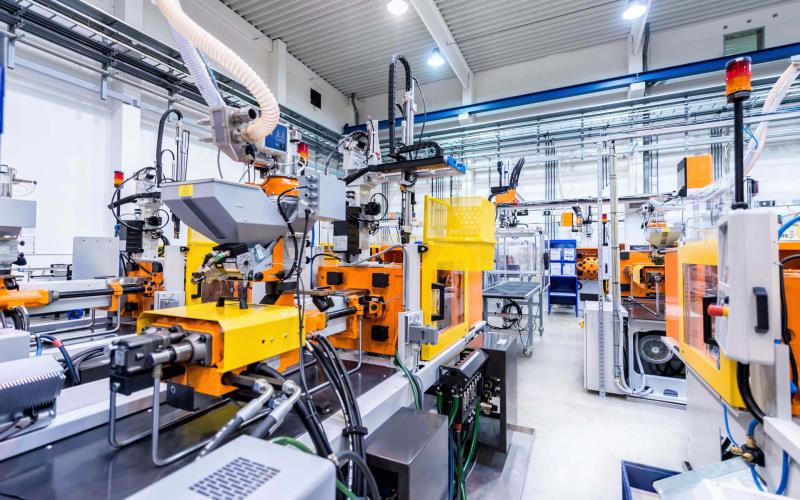
One of the most important manufacturing operations for making quality parts is injection molding. To maintain cost and efficiency levels, one needs to deal with numerous process variables in a systematic manner. In this report, we will focus on how to improve injection molding performance with respect to cost efficiency and overall efficiency.
A Quick Overview Of The Injection Molding Basics
The process of injection molding is defined by the melting of plastic pellets to form thick noodles, which are subsequently injected into the mold cavity of the injection machine. The melted plastics are cooled to form the desired output product. While the methodology is straightforward, the process is always striving towards optimized costs and enhanced efficiency and focus to detail is constantly needed.
Optimizing The Design Of the Mold
Mold Design Is Ontology Consultative Usability And Efficiency Studies A correctly designed mold is one of the prerequisites of achieving efficiency. The design of the mold is sufficient so that the need for post-processing is minimized and there is no variation or defect in the mold. CAD computer programs are now widely used for these calculations and simulations and they allow for better performance to be accurately predetermined.
Injection Molding Process Made Easy
Efficient Machine Settings It’s helpful while accomplishing productivity improvement to set the machine ranges e.g. temperature or pressure; in doing so quality standards are influenced and within moulding operations they are maintained. These standards are easily maintained by frequent maintenance and calibration checks, which reduce wastage caused by hindering production during downtime with appropriate relocation to areas of the plant that are free of these errors which lead to delays in making accurate calibration settings, which has a larger effect on operational output. Poor management of handover restrictions and timely performance of simple tasks can greatly increase waste levels.
Reducing Cycle Time:
Production efficiency is impacted by the time taken from injection to ejection (cycle time). To cut back on cycle times, there are many possible methods such as increasing the cooling period, changing to multi-cavity molds, and reducing changeover times. If you want to get More information about Protolabs Network, please visit our website.
Material Optimization
Waste Reduction Methods aimed at shrinking expenses are essential and always welcome. As useful and effective tactics, these can be achieved through gate and runner design optimization, leftover materials reuse, and minimal shrinkage materials application.
Material Handling and Storage
The safe transportation of materials helps to prevent contamination. Additionally, storage facilities that keep raw materials at ideal conditions will safeguard the quality of a product. These systems assist in achieving better overall efficiency of the molding process. The performance of molding processes is improved by using good handling systems and optimal storage conditions.
Quality Control and Continuous Improvement
Check measures QC introduction
With in-process inspection, the focus is preventing problems from getting out of hand. SPC is a charting technique to monitor critical parameters within established limits and help provide consistent product quality.
Adoption of continuous improvement
The injection molding process can be improved by implementing continuous improvement activities. Programs such as lean manufacturing and Six Sigma focuses on waste identification, and actions taken to deal with such wastes. It is very important to capture the spirit of continuous improvement in order to optimize cost and time efficiency in the long run.
Application Of Data Analytics
Data analytics provides an understanding of the entire manufacturing cycle until the final products are ready for distribution across the country; this strategy has great promise because it offers opportunity for everyone engaged in the operations center down to the factory floor to make rational choices on how to improve efficiencies in their organizations’ activities. For example, information on production processes as it occurs in combination with data on historical production trends may be utilized on understanding and controlling process variables so as to enhance quality and reduce scrap rates; analogous use of data also helps perform objective, rather than intuitive, determination of the optimum tool settings based on the programmers past experiences, thereby eliminating expensive trial and error attempts.