
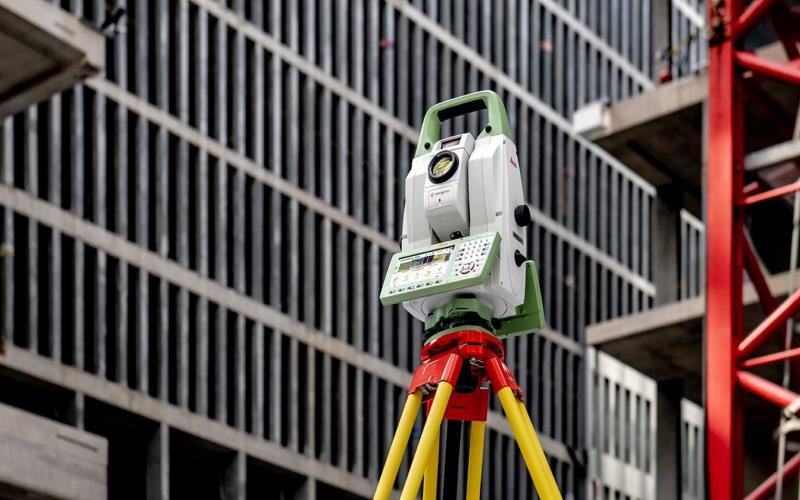
Land surveys are the foundation of construction, engineering, and property development. Accurate measurements are crucial to ensure that projects are built on solid ground, both literally and figuratively. To achieve this level of precision, surveyors rely on specialized tools designed to measure land with exacting detail. In this article, we will explore the top survey equipment that professionals use to ensure that every land survey is both precise and efficient.
The Importance of Accurate Surveys
Accurate land surveys are essential for many industries, from real estate and construction to infrastructure and environmental planning. These surveys provide the exact measurements needed to establish property boundaries, plan large-scale projects, or map terrain for construction. Inaccurate surveys can lead to legal disputes, structural errors, and costly delays, making the role of proper survey equipment vital for the success of any project.
Survey equipment has evolved significantly over the years, with modern tools now capable of delivering highly accurate results in a fraction of the time it used to take. These tools not only improve the efficiency of surveying work but also help reduce human error, ensuring that the data collected is as precise as possible.
Essential Survey Equipment for Land Surveys
Surveyors use a wide range of equipment, each designed for a specific function. Whether measuring distances, angles, or elevations, the right tools are critical for gathering accurate data in a timely manner. Here are some of the top survey equipment tools used by professionals today.
Total Stations
Total stations are among the most commonly used tools in land surveying. They are an all-in-one instrument that measures both distances and angles, making them extremely versatile. A total station uses a laser to measure the distance from the device to a specific point, while simultaneously calculating horizontal and vertical angles. This makes it ideal for mapping out land, setting boundaries, or calculating elevation differences.
What sets total stations apart is their ability to integrate with GPS systems, allowing surveyors to collect data on both small plots of land and expansive sites. The accuracy and versatility of total stations make them one of the top choices for modern land surveys.
Theodolites
Theodolites are another essential piece of survey equipment, designed specifically for measuring angles in both horizontal and vertical planes. While theodolites do not measure distances like total stations, they excel in calculating precise angles, which is crucial for tasks such as triangulation and boundary marking.
Theodolites are often used alongside other tools to provide more detailed angle measurements in areas where precision is critical, such as in urban construction or when defining property lines. Their ability to provide accurate angular data makes them indispensable in many surveying applications.
GPS Surveying Systems
Global Positioning System (GPS) technology has revolutionized surveying, especially for large-scale projects. GPS surveying systems use satellite signals to pinpoint exact coordinates on the earth’s surface, offering high levels of accuracy across vast distances. This is particularly useful for projects that cover large or remote areas, such as road construction, mining, or environmental surveys.
GPS systems are often used in combination with other survey equipment, like total stations, to provide even more precise data. They reduce the need for extensive manual measurements and can capture large amounts of data in a relatively short period, improving both efficiency and accuracy.
Advanced Survey Equipment for Enhanced Precision
While traditional tools like total stations and theodolites remain essential, advancements in technology have introduced new equipment that can enhance the accuracy and speed of land surveys. Here are some advanced tools that are making a significant impact in the field of surveying.
Robotic Total Stations
Robotic total stations take the capabilities of traditional total stations a step further by automating many of the tasks involved in surveying. With robotic total stations, a single surveyor can operate the equipment remotely, allowing for more efficient data collection. These systems use tracking technology to follow a target, which speeds up the surveying process and reduces the need for multiple people to handle equipment in the field.
Robotic total stations are particularly useful in complex or large-scale projects, where the ability to quickly gather precise data can save both time and resources. They also improve safety by allowing surveyors to work from a distance in potentially hazardous environments.
3D Laser Scanners
3D laser scanners are among the most advanced survey equipment available today. These devices use laser beams to capture detailed 3D images of the surrounding environment, providing surveyors with highly accurate data about the size, shape, and dimensions of both natural and man-made structures.
Laser scanners are particularly useful for projects that require high levels of precision, such as building renovations, historical site documentation, or topographic surveys. The detailed 3D models generated by these scanners can be used for a variety of purposes, from planning and design to monitoring the progress of a project.
Drones for Aerial Surveys
Drones, or unmanned aerial vehicles (UAVs), are becoming increasingly popular in land surveying, especially for large or difficult-to-access areas. Equipped with cameras, sensors, and GPS technology, drones can quickly capture aerial data that would take much longer to collect using traditional methods.
By flying over a site, drones can create detailed maps, capture high-resolution images, and provide real-time data that can be used to make informed decisions about land development. Drones are particularly useful for projects such as topographical mapping, environmental surveys, and construction monitoring. Their ability to cover large areas quickly makes them a valuable tool for efficient land surveys.
Choosing the Right Survey Equipment
In the middle of any land survey, selecting the right equipment is crucial to ensuring accuracy and efficiency. The choice of survey equipment depends on the size and complexity of the project, as well as the specific measurements required. For small-scale surveys, traditional tools like theodolites and total stations may be sufficient, while larger, more complex projects may benefit from the advanced capabilities of GPS systems, drones, or robotic total stations.
Surveyors must also consider the terrain and environmental conditions in which they are working. Some tools are better suited to flat, open spaces, while others are designed to handle rough, uneven terrain. Understanding the strengths and limitations of each piece of equipment will help ensure the success of the survey.
The Role of Technology in Modern Land Surveys
Technology has played a significant role in advancing the field of land surveying. With tools like GPS systems, laser scanners, and drones, surveyors can now collect more accurate data faster than ever before. These advancements have not only improved the precision of land measurements but also reduced the time and resources needed to complete surveys.
However, even with advanced survey equipment, the expertise of the surveyor remains critical. The best results come from combining modern technology with the skill and experience of a knowledgeable professional.
Conclusion
Surveying is a profession that requires both precision and efficiency, and having the right survey equipment is key to achieving those goals. From total stations and GPS systems to advanced tools like 3D laser scanners and drones, today’s surveyors have access to a wide range of equipment that enhances their ability to deliver accurate results. By choosing the right tools for the job, surveyors can ensure that their measurements are precise, their work is efficient, and their projects are successful.