
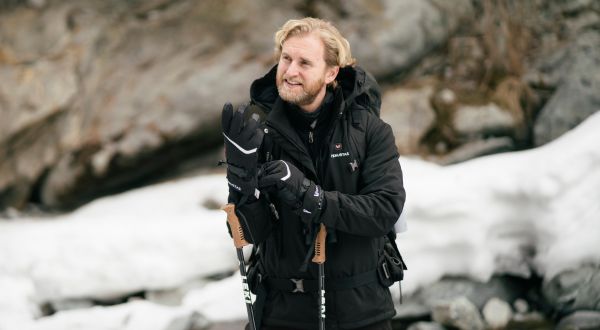
Your jacket needs to keep you warm exactly when you need it—without leaving you sweating all day or, on the flip side, cooling down. You notice this most during pace changes: you start off warm, you get moving, you stop—and suddenly you feel cold on your chest or lower back.
The nice thing about a heated jacket is that it helps you handle those swings more easily: you add heat when you come to a stop, without immediately reaching for a thicker jacket. In practice, your choice usually comes down to two directions: do you want a jacket that moves smoothly with you and stays comfortable through changes, or do you want extra fill that raises your baseline warmth so you stay comfortable even on a low setting (or without heating)?
Start with your day: when do you actually need warmth?
First look at your rhythm, not “how hot can it get.” If you’re active a lot (for example skiing, snowboarding, or brisk hiking), a heated jacket often works best when the jacket itself isn’t too thick. That way heat and moisture can escape more easily, and you mainly use the heating as fine-tuning for stop-and-go moments.
A practical sign: if you notice your back getting damp after 10 to 15 minutes of moving, you’re often better off with less insulation—and letting the heating do the work as soon as you stop.
If you’re standing still a lot (for example in the lift, by the piste, while taking photos, or during a windy break), extra insulation helps because it holds warmth more evenly. You often notice it in your core: your temperature stays steadier and your lower back feels better when you’re not moving for a bit.
A useful sign: if, while standing still, you feel within a few minutes that your chest, sides, or lower back could use extra warmth, more insulation helps heat linger longer—so the heating doesn’t have to work as hard.
Freedom of movement: what to watch for when trying it on and wearing it
With a heated jacket, fit matters even more. It feels best when it sits close without pulling, even with a layer underneath. Pay special attention to shoulders and elbows: you want to move freely when you bring your arms forward (holding poles, grabbing your phone). If there’s too much room, air can circulate more easily along your torso (for example at your lower back or along the zip). That makes heat leak out faster, even when the heating is on.
A quick fit check:
Raise your arms like you’re adjusting your helmet and rotate your torso like you’re looking behind you. A jacket that fits well stays calm in place and feels comfortable across your chest. If it rides up or pulls tight, a roomier model or more space in the shoulders is often nicer. If it feels loose around your waist or at the bottom of the zip, a trimmer model often seals better, keeping warmth closer to your core.
Good to remember: more freedom of movement often goes hand in hand with less insulation. That’s great during activity, and the heating helps you out once you stop. If you like wearing a thicker midlayer, check that your shoulders and upper arms still stay free.
Extra insulation: comfortably warm, but less flexible
More insulation often feels comfortable right away: you put the jacket on and the fill holds warmth more easily, even if you’re not moving much. That’s great if you get cold quickly or if your day involves a lot of standing around. The heating then mainly acts as a buffer for moments when wind or stillness asks for just a bit more.
Do keep the feel in mind: under shoulder straps, extra insulation can feel bulkier, and with a backpack the jacket can bunch up more quickly at your upper back. During hard movement, more insulation can also hold onto heat and moisture longer. Sign: if your back stays clammy for a long time after exertion, a less insulated model often feels better, with the heating as a back-up for the cold moments.
Quick choice guide in 5 short points
– Lots of movement: a lighter, less bulky model often helps you stay comfortable and get clammy less quickly, especially on your back and around your armpits
– Lots of standing still: extra insulation often helps hold warmth longer, even on a low heat setting
– You often wear a backpack: a well-fitting model feels better and prevents bunching or pressure at the upper back and shoulder straps
– You work with layers: choose a fit that keeps shoulders and elbows free, even with your usual extra layer underneath
– Think about your routine: use the heating mainly to cover stop-and-go moments (for example in the lift or during breaks), so you don’t have to rely on high settings as much
At Berts Chat, that’s why we mainly look at use: what does your day look like, where do you feel cold first (chest, lower back, sides), and when do you actually want ventilation (during climbs, walking, or descents)? Once you’ve got that clear, it’s much easier to choose a model that supports your warmth while moving and while taking breaks.